Friday, October 28, 2011

The Triad of Communism Tour is Complete and the Smell of Coffee in Good Morning Vietnam!

Hello, greetings, welcome back and how are ya doin'!  Seriously, we here at the YRC are in a GREAT MOOD !   Why, if the mood was any better it would be illegal in certain southern states in the U.S.

Why are we full of mirth?  First, the rarest of all events in Shanghai is happening right now.  Yes, dear friends....the sun is shining here in the 'Hai.   Second, the YRC staff, their luggage and snarky attitudes have all arrived in the euphoric conclusion of the 24-day Napa, Naptown and Napalm Tour.  We are now here on ChangShu Lu in the Jing'An District.  The third reason for mirth is that its Friday, and time for this week's Yellow River Chronicles!  So put on your sunglasses and pour yourself a tall "333" beer, because today we are headed to the Viet of Nam, Ho Chi Minh City and the Mekong Delta.


Here at the YRC, we say "start strong and then fade out later when the reader gets tired".  So let us start with this:  If there is an iconic destination for those of us from the 60's and 70's, it is Vietnam.   Some of us were called to serve there, some of us saw combat, some of us resisted going there, some of us went to jail to protest those who were there, some of us were not called but lost friends there, but we were all changed by the experience of that War and its consequences.

Huey with mini-gun on display at War Remnants Museum

Out in the Mekong Delta
Vietnam was always there in the news, in conversation, in the body counts playing on the radio in the background. The films are legion: Apocalypse Now, Full Metal Jacket, The Deer Hunter, Green Berets, Platoon, just to name a few. Wikipedia lists 125 films about the war. So to actually visit was a particular honor.

To summarize, to cut to the chase, to put a bow on it, Vietnam was not what we expected.

Of the three cities in the Triad of Communism (Moscow, Beijing and Ho Chi Minh City), we expected the experience as Americans to be the most difficult in Vietnam.

Millions of Vietnamese and tens of thousands of American soldiers died in a 20-year war that appears, from a historical perspective, to have accomplished absolutely nothing.  (We would recommend "A Bright Shining Lie"  is a great book on the subject, if you are interested.)

But to keep the narrative moving and NOT refight the War, we here at the YRC felt that, as a rule, Americans would not be particulary welcome in Vietnam.

To support this notion, our experience in Moscow (see the Throw Lenin from the Train columns) showed us a city that has not forgotten a much more distant WWII.   The pall of the War still hangs heavy in Russia and signs of it are everywhere.  Moscow remains a haunted city and you do not see many German tourists there.

Rush hour, Saigon
So how was HCMC??  The city itself is a typical Southeast Asian capital, with more motorbikes than usual.  Traffic is tough and driving is a full contact sport.  There are the usual markets selling fake stuff (usually from China), there is fun street food and lots of cheap beer.  With the explosive growth in the economy, there is construction everywhere, generally new skyscrapers.  There are tourists zones and tourist bars and you can get a good suit made there even more cheaply than Shanghai.

The people aspect, however, is a little more difficult to describe. The experience was unique in many ways.  In our keeping of cutting edge narrative and daring reporting, we here at the YRC think the best way to summarize the experience in 'Nam is with an anecdote.  We will use an anecdotal narrative, so to speak.

The top "Thing to Do" in Saigon (as the locals call Ho Chi MInh City...the only place you see HCMC is at the airport) is to take a run out on the Mekong Delta in a fast moving, modern version of the PBR, the Saigon River Cruiser.  With an iced coffee in hand, we watched as the complex of canals of the city fell behind and small villages flashed by.   Our guide, Han, cheerfully led us through a series of villages, markets and temples.   Everybody was friendly.  Everybody waved.  People stopped to talk to us.  Children followed us around, singing "Heeeeeeyooooooo!   Heeeeyyyoooooo!"

Leading member of the 'Heyyoooooo" team
Back on the boat, after a tasty mango snack and a refreshing fresh coconut drink, Han wanted to talk geopolitics.  How did we, as Americans currently living in China, like the Chinese?

It takes a Village to Raise a Duckling
YRC:     We like them fine.  (Are there any mangoes left?) We have to like them.  America owes them too much money.

Han:      Ha ha. We do not like them.  We think they are getting too aggressive.

YRC:     You mean in the South China Sea?  They seem to think it belongs to them.

Han:     It does not belong to them.  It belongs to many countries and to Vietnam.  If the Chinese get too strong, they will be a big problem.

YRC:     Well, we can see why you might be worried.  They just launched their first aircraft carrier after all.

Han:     Vietnam is a small country.  We will need protection against them.  They are too strong for small countries in Southeast Asia.

YRC:   Probably so.  But, China was your ally during the war.  Who do you think is going to protect you against them?

And here, Han stopped and looked puzzled.

Han:   Why, you!  (looking surprised we did not know)  We are looking to the Americans to protect us against the Chinese.  Only you are strong enough to face them.

And so, the axis of the universe took one of those miraculous turns.  That sudden twist in perspective reminded us that there may be nations.  Nations may have their histories, government and politics, but even so, a nation is just people.  Everybody has their own perspective on things.

The enemy of my enemy is my friend, the enemy that was an enemy is a friend and the ally that is an enemy is an enemy.  The Chinese helped us beat you and now you will help us beat the Chinese.  Heeeeeyooooooo, and welcome back!  It was with this curious bit of knowledge that we rolled back to Saigon, a city that would apparently be glad to see us.  And if we get the chance, we'll be happy to go back and get Heeeeyooooo'd again.

And we'll be glad to see you back next week for another exciting edition of Yellow River Chronicles.  Stay healthy and stayed tuned, and we'll chat next week!


Thursday, October 20, 2011

Escape from Chinatown and the Fading Notes of Smoke and Graphite


What is up, dude and dudettes!   Thanks so much for gathering poolside to once again share the acrimony and salty innuendo here at the Yellow River Chronicles.   As you may have noticed, we had a "VACANT" sign on the office door as the truant YRC staff headed for California for the first stop in the Napa, Naptown and Napalm tour.  Our BAD, man! We will make it up to you with a few ice cold glasses of good old YRC moonshine.  Yes, dear readers, for next series we will be Narcistic in Northern California,  Noisy in Naptown and Happy in Ho Chi Minh City as we hurtle around the globe in our search for the smell of Cabernet in the morning.

We are going to kick this edition off with an update on one of our favorite subjects, Evil Food in the PR of C.  As you may recall in an earlier column, we introduced "Toxic Food Bingo".   The mayhem continues during Shanghai's hairy crab season with "Bleached Crabs".  Here is it from www.shanghaiist.com.


Bootleg crabs mar another hairy crab season

43264990_dfdcde521b.jpgBy Benjamin Cost
The annual scourge of bootleg hairy crabs, one of China's most notorious counterfeit items, will ensure that you have a less than merry Autumn hairy crab season.
Each fall, hairy crab pirates duplicate China's most coveted crustacean: the Yangcheng Lake hairy crab, an expensive delicacy prized for its sweet, delicate meat.
Unfortunately for the Yangcheng Lake Hairy Crab Association, shanzai crabs are here to stay, unlike shanzai phones which are on their way out: the counterfeit market for hairy crabs is ten times greater than that for authentic hairy crabs. Just ask local crabber Xing, who says, "Everything is being counterfeited. There's nothing you can do about it. And you can't control it."
And believe us, the Yangcheng Lake Hairy Crab Association has tried everything from hiking up the price by 10 to 20 percent in 2010 to giving every shipment a 12-digit security code. This year, they distributed 15 million plastic "crab authentication" tags complete with serial numbers and a toll-free number to help customers distinguish their crabs from the fugazis.
Did we mention that sellers have even taken to using lasers to etch serial numbers onto the crabs themselves? The hairy crab black market is not to be toyed with, apparently.
Even still, the authenticity tags aren't entirely trustworthy, as many tagged crabs don't even originate in Yangcheng Lake, located 3km northeast of Suzhou. Many crabs spend only half a year before the harvest at Yangcheng Lake, since six months is the minimum period required for a crab to get its Yangcheng Lake bona fides. Increasingly, more and more alien crabs will have to be imported to the lake due to nearby human development interrupting crab breeding patterns (after all, the lake's just a short train ride from Shanghai).
With all the fakes on the market, people might be less eager to spend the 300 yuan a piece on these two-faced scuttlers.


Next week, bleached pork!!  And now for something completely different:

To start the Calfornia tour report with our usual blend of candor and rancor, we are going to discuss hauntings.  Let us elaborate:  some are haunted by spirits, some are haunted by their past, some (you know who you are) are haunted by small whiney children with sticky hands and others are haunted by the notion that maybe they should be doing something better with their time.

Let Us Pet Us
Here at the YRC we are haunted by Chinatowns.  Whenever we visit a city, a Chinatown jumps out of an alley reeking of dim sum and stalks us through crowded markets filled with plastic buddhas and fake Rolexes.   Bangkok, Kuala Lumpur, Chicago, New York, London, you name it.

It was our fear of the dreaded San Francisco Chinatown that led us to hide out in the Castro, setting for the film "Milk".  The film was neither about dairy products nor Wisconsin, but instead the life and times of Harvey Milk.  Harvey is remembered by a small plaque in front of his former camera store and the Castro Street Fair.  We saw both while we were there.  While we were disappointed that there were no amulets at the Fair, there were some excellent snacks and a few curious booths, including a "Petting Zoo".  You figure it out.

The Check's in the Mail
While San Francisco is the setting for many, many great films, our favorite remains "Big Trouble in Little China" featuring Kurt Russell as Jack Burton.  Heres the link to the trailer on YouTube if you're interested in checking it out.  It's all in the reflexes.

From Rotten Tomatoes:  Playing in a manner that can be conservatively described as larger than life, Kurt Russell plays a macho truck driver who agrees to go to the San Francisco airport and pick up his friend's (Dennis Dun) fiancee (Suzee Pai, freshly arrived from China. Suddenly, a gang of Chinatown toughs kidnap the girl right before Russell's eyes. After a wild chase sequence, Russell discovers that the girl has been abducted by a genuine, bonafide sorceror (James Hong), the ghost of a 3000 year old warlord. And that's just for starters. 

Big Trouble in Little China Trailer on Youtube


The Haight sans Ashbury
When we fully recovered from the Fair, we also took in the rather dreary Haight-Ashbury, the Botanical Gardens and Muir Woods.   Why, you might ask, and all we can say is, maybe we were in the mood for....plants.   And excellent plants they were, including a display of "Wicked Plants" that included carnivorous and poisonous plants.    Along that line, have you ever wondered why Botanical Gardens are called Botanical?  After all, what is in a garden that is not, in fact, botanical?  Curious.


Part of the Wicked Plants Exhibit


The Mighty Redwood Groves

A highlight for the staff was the spectacular redwoods at Muir.  Whenever we visit Muir Woods, we have the overwhelming urge to bow before them.  While this creates the risk of stroller people from the Plains running over you, it does show the respect that the Big Trees command.

When we finally made it to Napa we were pleased to find that there was no Chinatown there, and in fact, dozens of fine establishments dedicated to wine.  Napa has that "Adult Playground" feel to it with many Bed and Breakfasts, Inns and Lodges.  And there were wine tastings everywhere.  Wine tastings at the vineyards, wine tastings at the grocery store, wine tastings at the gas station, wine tastings in the lobby of the B&B.

Route One Roadside Attraction
There were so many great wines, it was almost aversion therapy.  You were gargling a fine Cabernet, then an Pinot, then another incredible Vinter's Master Reserve, then an amazing Zinfandel.

By then, the forward grapefruit was fighting with the lingering graphite. The resonant leather and smoke was washed away by hints of ginger and papaya while the pepper tones simply wandered off.

While the visit was incandescent in its beauty (pause), if we were to return to northern California, it would be for one thing that you cannot find in the PR of C.  No, not the surf, nor the spectacular views nor the air you can actually breathe, nor tall blonde people nor large bounteous grocery stores.  No, it would be the oysters.

Heading due west out of Napatown, we connected with famous Route One and cruised south down the coast from Tamales.  It is a food, and a place.

As we were stopping to admire the view, we learned we were in oyster country! While there are oysters in the PR of C, like certain other behaviors, consumption is considered...high risk.

So it was there, south of faire Tamales,  that we were able to inhale plates of excellent oysters grilled right after the oystermen brought them in from the bay.
No bleached oysters, these.

A crisp California Red Ale and a large plate of oysters was the perfect punctation point to begin the next phase of the Narcistic in Northern California,  Noisy in Naptown and Happy in Ho Chi Minh City tour.  Thanks for coming back and see you next week, when we discuss Tiny Weddings and Big Parties!

Roadside Oyster Paradise

Friday, September 30, 2011

The Third and Final Part of a Tale of Two Squares, or Throw Lenin from the Train

The famous Mockba Route
Yellow Blue Bus!  In case you didn't know, if you say that fast in English, it sounds like "I love you" in Russian.  And, in keeping with that cheerful start, we here at the Yellow River Chronicles love it that you are back for the Third and Final episode of "Tale of Two Squares, or Throw Lenin from the Train".

The Trans-Mongolian route travels through seven time zones and 7,865 miles to connect the two Great Capitols with Important Dead Guys in their Central Squares:  Moscow and Beijing.   Today, to finish the series, we are going to delve into the mysteries of "What Do You Do for Seven Days on a Train?"

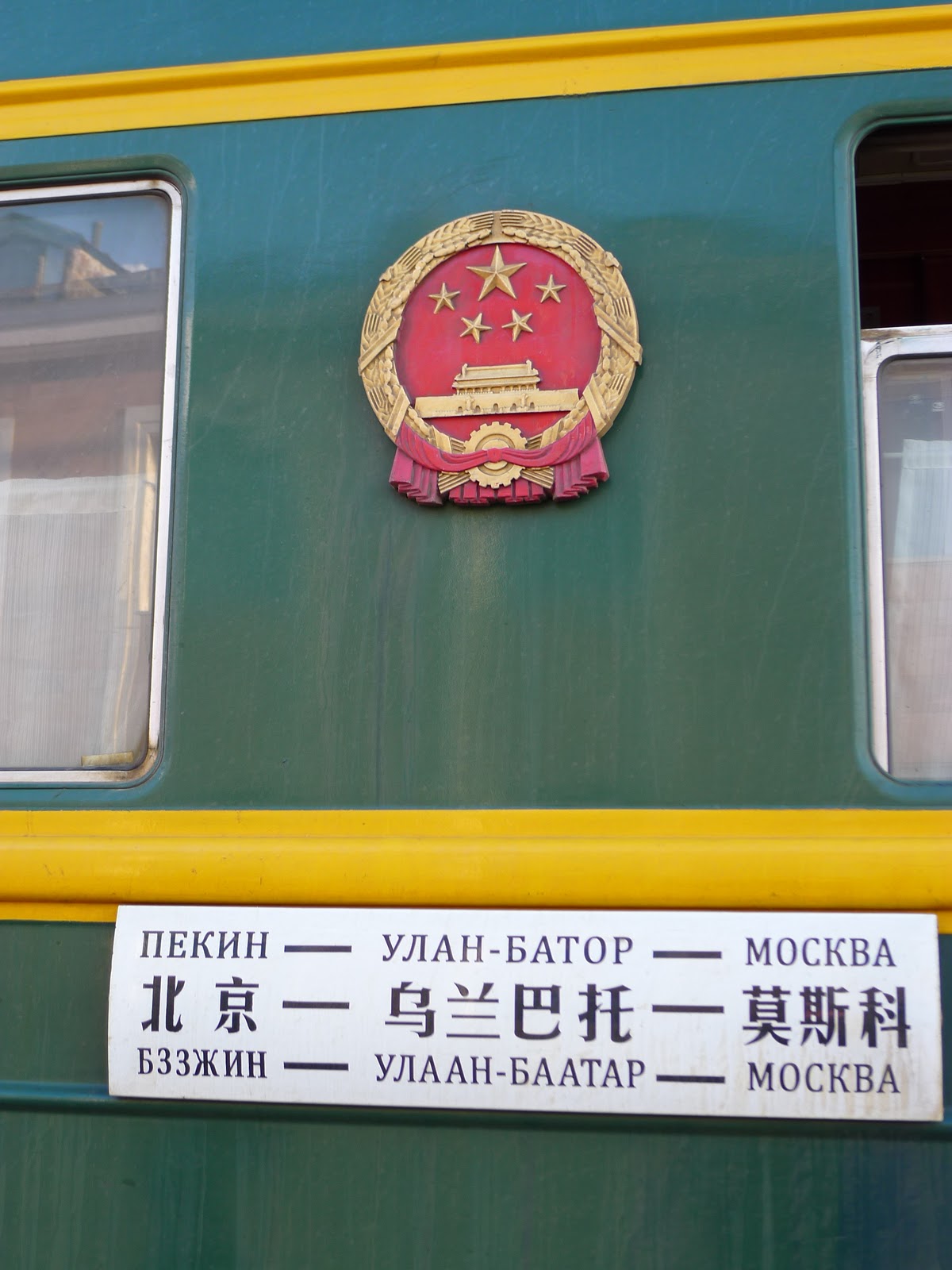
So here we go!   As we piled on to the train, we were surprised to be greeted on the Russian train by...Chinese train attendants.  As it turns out, the staff of the Trans-Mongolian are Chinese.

Imagine that!  To fly 8,000 kilometers from China to find....Chinese.  We were chuckling to ourselves as we carried our own bags up the steep stairs and dragged them into the cabin.   The staff of the other two routes, the Trans-Manchurian and Trans-Siberian, are Russian.  The restaurant cars, which are changed as the train crosses into each country, are staffed by Russians, Mongolians and Chinese respectively, but the train staff were our old friends from the P.R.C.   We felt quite at home when they threw our blankets and sheets at us, nodded noncommittally to our questions and generally expected us to live honorably and independently for the rest of the journey.

Hey, imagine seeing YOU here!!
We here at the YRC do enjoy a life of romance and adventure.  Usually.  And we very much want to share the experience of the trip.  So, to help the beloved YRC readership understand the fundamentals of day to day life on the Trans-Mongolian, we have added a new feature to the YRC, an Einsteinian Mind Experiment!  GLHF!!

The Importance of Trans-Mongolian Relativity Theory:

Ready?  Let us suppose that there is a Tovarich standing on a train platform and a Tovarich on a train.  They are both wearing big fluffy hats and wave to each other cheerfully.  Now, if the train starts rolling through the station at 10 kph, the Tovarich on the train will appear to the Tovarich on the platform to be traveling at 10 kph, yes?  Yes.  There goes Ivan, rolling by!  See you, next week, Comrade!

Platform Tovarich and Train Tovarich at work
Part Two:   Let us imagine that the same two Tovarichs are at the same station, one on the same platform, and one on the same train.  This time, instead of standing still and waving to Platform Tovarich, the Train Tovarich decides to run forward on the train at 10kph.  To the Platform Tovarich, the Train Tovarich will be traveling away at 20 kph (10 for the train and 10 for the Train Tovarich's speed).

Hurtling Through the First-Class Cabin
In the perception of the Train Tovarich, relative to the train, he will be running down the train at 10 kph.  If he looks out the window, objects (like the Platform Tovarich) will be passing at 20kph.

So, inside the train he is traveling at 10kph, but outside he is traveling at 20 kph (his speed plus the train's speed).  He moves away from Platform Tovarich at 20 kph, correct?  Da!

Now, the third and final experiment.  Let us imagine that the Tovarich on the train runs towards the back of the train at 10Kph.  This means he stays exactly at the same place as the Tovarich on the platform even though the train is moving.  This is just like walking the wrong way on an escalator.  To the Platform Tovarich, the train is moving but his friend, the Train Tovarich, is not moving.  To the Train Tovarich, he is moving at 10 kph but the Platform Tovarich is right there on the platform.   This relative movement effect, dear readers, is at the heart of Trans-Mongolian relativity theory.

Why is any of this important, you may snarl as you spill your coffee on your banana pancakes.  Where are the snacks, you may ask.

Next stop, the Kyrgyz Steppes
This is to illustrate what happens on the Trans-Mongolian, dear readers.   You board in Moscow and leave near midnight.   You fall asleep in your cozy bunk watching the lights flicker outside the window and listening to the gentle click-clack of the wheels.  You dream of snow and wolves and Vladimir Ilyich Lenin in a bear suit.   When you wake up the next morning, you are rolling past Chuklominsky, 910 km from Moscow. You feast on Russian oatmeal and tea made with smokey water from the Samovar and you check the fluid levels in the vodka bottles. All is good and the western Russian countryside is rolling by.   You have your quiet little home rattling due east at a steady 57kph, headed to Udmurt country.


How many klicks to Ulan Bator?
The days progress but you no longer measure in time.  You measure in distance.  How far are we away from Moscow?  How far to the next platform packed with babushka with boiled potatoes with dill?  And, beer?

Then you have your moment of Trans-Mongolian Relativity.   Due to the harmony and peace of traveling on a train (and also that there is not much else to do)  you are actually having a zen moment.  You are perfectly still.  The steam from the tea cup rises before you.  Beams of sunlight drift across the table top.  You suddenly understand a fundamental truth:  You are actually not moving.  it is the countryside that is moving!  And you settle in to watch 8,000 kilometers of spectacular scenery.


We here at the YRC are used to traveling long distances to arrive in places where our time is 12 hours out of sync with local time.  In this case, we had traveled 8,000 kilometers away to return to time that was...the same...as our time??   By the time we got to Beijing, we had crossed seven time zones to end up back in the original time zone, creating some severe temporal issues, we will confess.  We still occasionally check our watches to see how far we are from Beijing but that's one of the hazards of life in the fast lane.


Two monks were watching a flag flapping in the wind. One said to the other, "The flag is moving."
The other replied, "The wind is moving."
Huineng overheard this. He said, "Not the flag, not the wind; mind is moving."


And so, we're going to keep moving here at the YRC and head out to San Francisco, the Castro, and Napa Valley!   Thanks for tuning in, and come back next week for the exciting "Wedding in Napa Valley!"

Thursday, September 22, 2011

Part Two of The Tale of Two Squares or Throw Lenin from The Train....

Welcome back to Part Two of the Yellow River Chronicles' visit to seven-time zones:  Moscow, the Trans-Siberian Express and Beijing!
Any idiot can face a crisis, it is this day-to-day living that wears you out.
Anton Chekhov
Honor Guard, Tomb of the Unknown Soldier
A Staff Historical Anecdote:  We at YRC recently visited the western bookend of the Communist Nation's Capitals, Moscow.  We did this for three particular reasons:

Reason the First:  You may not know, but as a young YRC staff members in training we had frequent contact with Russians.
Well, Soviets, really.

Truth! In September of 1962, part of the staff moved to West Berlin.  The Russians, anxious about our arrival, built the Berlin Wall between East and West Germany in August of 1962.

This meant we had to share Berlin with the French, the British, the West Berliners, the East Berliners and of course, the Russians.  At the time, they weren't known as the Russians, they were known as the Soviets.  The Soviets would cross the Wall into West Germany at Checkpoint Charlie, eat in the restaurants, go to the shows and stop to check if it was a good time to invade West Berlin and start WW3.  Luckily, they said, "Nah....maybe later" or the Russian equivalent.

Red Square, Kremlin, and Lenin's Refrigerator
Reason the Second:  We were delighted to get to the musty Sheremetye airport in Moscow because it meant we could hurl ourselves OFF of the Aeroflot Flight 528 from Shanghai.

In our haste to leave that accursed plane and its accursed staff and accursed seats, we accursed Aeroflot with energy and rage.  We ran down the exit ramp, shaking our fists and hurling curses of "May Rabid Dogs Drag Your Rotten Bones Through the Trailer parks of Hell" or "May Lenin Rise from the Dead to Haunt You with Proletariat Feriocity".  

It was also at the Moscow airport that we encountered the first of the Moscow Zombie cab drivers.   We do not mean to offend, but we actually did encounter many Zombies during our visit.  Zombie subway riders, Zombie ticket sellers, Zombie restaurant staff and Zombie store attendants.  Either that, or facial expressions are banned in Moscow.  We tended to go with the Zombie idea...it made more sense.

(Background:   Here's the link to the World's Rudest Cities article where Moscow came in number two.  They are very close to edging out Mumbai : Moscow Second Rudest City in World )

Reason the Third:   Yes, Moscow is ancient with a long and important history.  Yes, it is the largest northern city with nearly 11MM residents. Yes, it features artists, poets, philosophers, literary geniuses and the rise and fall of empires.  But in the highly impressionable minds of the YRC staff, Moscow was always the coolest city in the world.

Why?  You had Bond.  You had the KGB.  You had mystery....adventure and the only way you were going to get there was with a M-16 in your hand.


Busy but elegant, the Moscow subway station
Yes, Comrade, there are chandeliers
Or, you could take the subway!  Moscow has
an extensive and ornate subway system that is the second busiest in the world (after Tokyo).

According to Wikipedia:  The Moscow Metro was one of the USSR’s most extravagant productions. Stalin directly ordered the metro’s artists and architects to design a structure that embodied svet (radiance or brilliance) and svetloe budushchee (radiant future).[15] With the use of reflective marble walls, high ceilings, and grandiose chandeliers many of the Moscow Metro stations are so resplendent that they are reminiscent of an “artificial underground sun”.[16] This underground communist paradise.[17] served as a constant reminder to passengers that Stalin and his party had delivered something awesome to the people in return for their sacrifices. Most importantly proletariat labor produced this svetloe budushchee.

So put that in your samovar and smoke it!    While the YRC would not classify Moscow as "tourist friendly" or even "tourist indifferent", there is and area of town where you can stock up on matryoska dolls and literary history. It is called the Arbat.

We're BAAAACCCKKKK!!!
As Moscow's oldest street, the Arbat has been settled by the aristocracy, invaded by Napoleon, resettled in succession by the intelligensia, the artist community, and then USSR high-ranking officials.  It is now is a pleasant pedestrian area with some excellent architectural details.

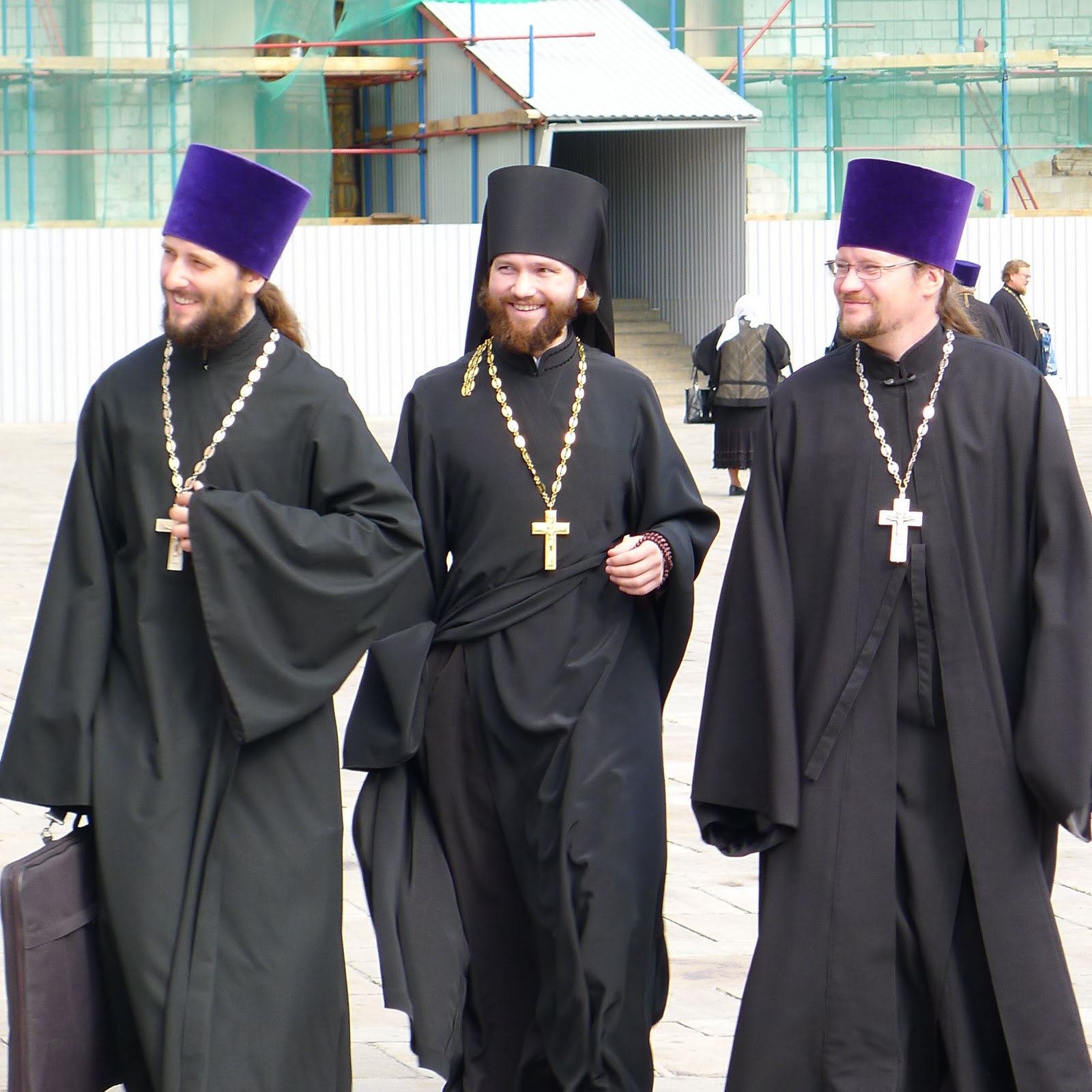
Unfortunately, similar to the destruction of temples during the Cultural Revolution in Beijing, Stalin used cultural change as a way to erase many churches and other "unsuitable for the proletariat" buildings but the Arbat retains its "old city" flavor.  And, you will be interested to know that the Orthodox faith is seeing a strong resurgence in Moscow as many churches are now being rebuilt and returned to religious use.

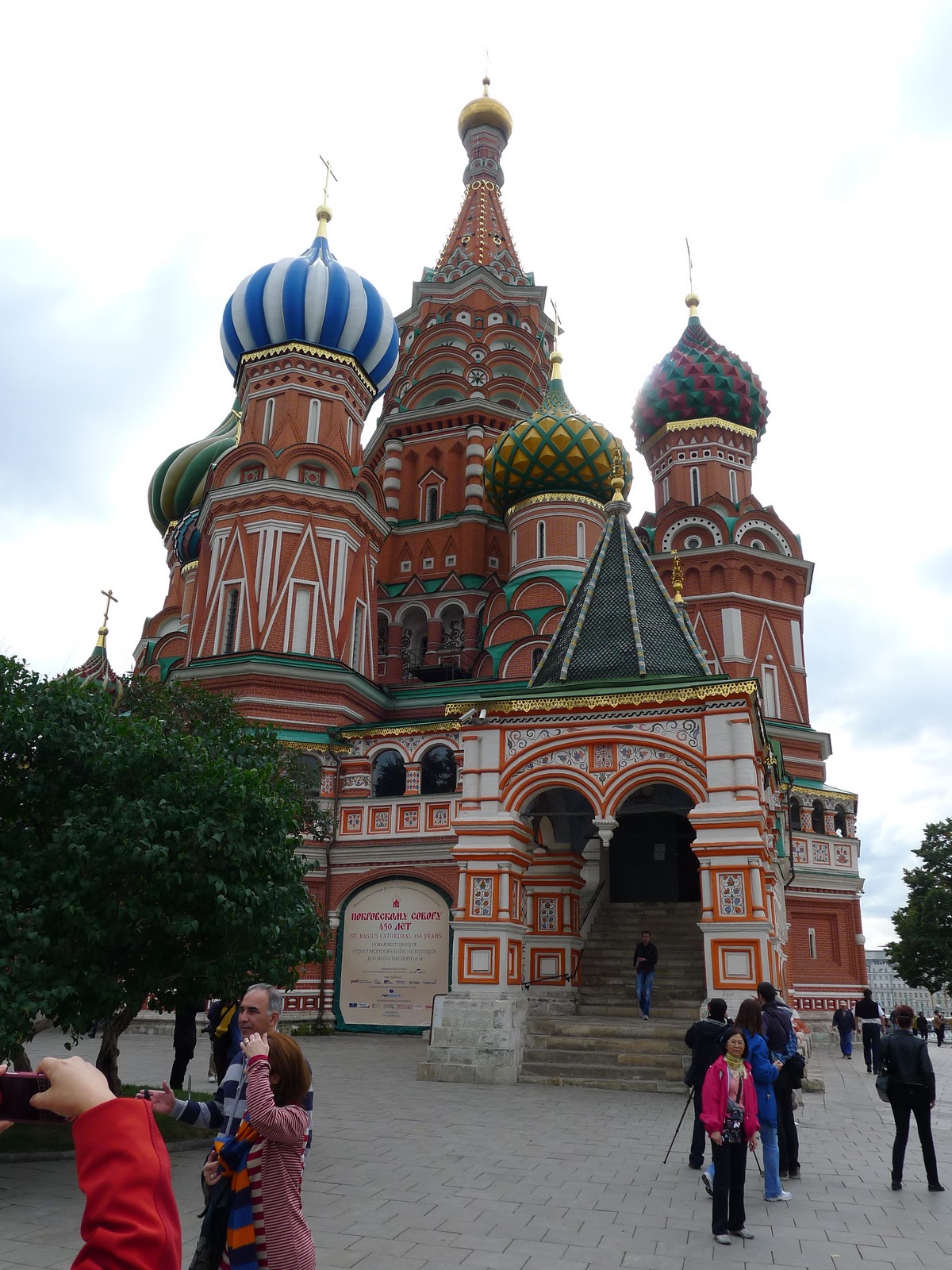
No trip to Moscow would be complete without a run to Red Square, the center of the city since the 13th century.   Red Square seems to stretch to the horizon line when you first enter and one can sense the history as you enter.  And it is this sense of history that seems to permeate the Russian culture.


The average Russian citizen has many reasons to be glum.  History has not served Mother Russia well.  In fact, the 20th century was disastrous for Russia.  First, there was World War I which cost 2 million lives.  Then, the overthrowing of the Tzars in the 1917 Revolution and the following Russian Civil War which cost 7 million lives.  Right after that was World War II which cost 26 million lives.  Then Stalin purged 20 million of his own people.  Then the rise and fall of communism and the sudden shift from Socialist Republic to despotic kleptocracy under the Putin KGB-derived regime.  And, they have to fly Aeroflot all the time.   Hand me the vodka, dorogaya!


Thanks for tuning in for the second of the Tale of Two Squares or Throw Lenin from the Train.   Next week....Life on the Train! What do you actually do on a train for seven days?   Come back next week and find out, here at the Yellow River Chronicles, your friends on the Other Side of the World.
Captain Ivan Danko on duty at Red Square


Friday, September 16, 2011

A Tale of Two Squares, or Throw Lenin from the Train....

This is the first YRC of a three-part series on the recent Moscow to Beijing trip.  There was simply too much material to fit into one column, so with enough filler we hope to stretch it out before we have to do any real work again.

The Adventure Begins:   Pack your noodle cups, a case or two of vodka and a copy of "Das Kapital" because it is time for this week's Yellow River Chronicles, Comrades!! All aboard for the Moscow to Beijing run as we visit the "bookends" of communism!  Budem zdorovy!

As you were forewarned in earlier editions, the staff of the YRC recently gambit-ed a +16,000 kilometer ride from Asia to Europe and back again.  "Why?" we were asked in Moscow by a cab driver (which gives you a shorthand view of the current state of mind in Moscow). Well, Tovarishch, we retorted, to take the famed Trans-Siberian railway!

The BackStory:   After months of research and martini tastings to determine the best way to celebrate a certain staff members' tragic entrance into Senior World, we made the following decision.  We would NOT visit the Vatican to visit the Pope again despite his offer of a really cool birthday party and a game of "Pin the Tail on the Cardinal".


Instead, we went for a new destination, one of the world's Great Journeys, the Trans-Siberian Railway.  For those of you not familiar with the route, here is one of the stalwart YRC FactMoments", courtesy of Wikitopia:


The Trans-Siberian Railway is often associated with the main transcontinental Russian line that connects hundreds of large and small cities of the European and Asian parts of Russia. At 9,259 kilometres (5,753 miles),[1] spanning a record seven time zones and taking eight days to complete the journey, it is the third-longest single continuous service in the world, after the Moscow–Pyongyang (10,267 km, 6,380 mi)[2] and the Kiev–Vladivostok (11,085 km, 6,888 mi)[3] services, both of which also follow the Trans-Siberian for much of their routes.
A second primary route is the Trans-Manchurian, which coincides with the Trans-Siberian as far as Tarskaya (a stop 12 km east of Karymskaya, in Zabaykalsky Krai), about 1,000 km east of Lake Baikal. From Tarskaya the Trans-Manchurian heads southeast, via Harbin and Mudanjiang in China's Northeastern Provinces (from where a connection to Beijing is used by one of Moscow–Beijing trains), joining with the main route in Ussuriysk just north of Vladivostok. This is the shortest and the oldest railway route to Vladivostok.
The third primary route is the Trans-Mongolian Railway, which coincides with the Trans-Siberian as far as Ulan-Ude on Lake Baikal's eastern shore. From Ulan-Ude the Trans-Mongolian heads south to Ulaan-Baatar before making its way southeast to Beijing.


The Journey Starts Here...
Route, Schmooot:   We at the YRC opted for the Trans-Mongolian route, which dives south at Ulan Bator towards Beijing, thus linking the two great Communist countries, the former U.S.S. of R and the current largest communist nation, the P.R. of C.

This would also give us a chance to swing through Mongolia and the vast Gobi desert.  Our guide on the trip was the essential Trans-Siberian Handbook, by Bryn Thomas.  He uses kilometer markers as you progress on the journey.  For example, here's a staff favorite:
Km733 (W) (Mongolia):  Airag   The train doesn't usually stop at this small station, which is in the middle of nowhere and surrounded by scrap metal.
Ah hahaahahah!  We love that one!  If we could ask your patience, we will break from our horror of chronological travel narratives (Day one, we arrived at the...) and begin this missive at the beginning. It is good to get these matters out of the way and continue our conversation with a basic sense of optimism and good cheer, don't you think?

We will simply state that we here at the YRC neither support nor deny the notion of an afterlife, nor, a good place or bad place in the afterlife.  These matters are better left to philosophers and U.S. presidential candidates.  With that all said, we at the YRC want our readers to know that if there is a gateway to Hell, then AeroFlot flies there, right after the Shanghai/Moscow run.   Thank you, dear readers for letting us vent.

Kremlin, Red Square, Lenin's Tomb
Where Lenin and Mao Lay Sleeping.  The trip was book-ended by the two great communist squares: Red Square in Europe and Tiananmen Square in Asia.  They both have their stories to tell, but perhaps they are better told in the history books.  Well, at least more accurately.

Tianenmen Square and Mao
However, our observation and contribution to the literature is as follows.  Both squares are large, well maintained and perfectly suited for parades and the display of military hardware.

They are also both the centers of power and administration in the capital cities of their respective countries and they both have a waxed dead leader on display, Lenin in the West and Mao in the East.

Lenin has become a bit of an embarrassment for the Russians, so they are trying to find a delicate way to move him.  Mao seems content to stay where he is and with real estate prices going through the roof in Beijing, it would be hard to find a better location these days.

Both squares are extremely busy and are major tourist attractions packed with souvenir vendors and tour groups.  However, we discovered something truly significant:  there is an unusual lack of snacks at both sites.  Every PRC tourist site of any note is jammed with corncob and baozi vendors (and the sausages are never too far in Moscow) but in these two squares, no snacks were to be found.

The Snack Connection:  Between the two squares, however, there were many snacks to be found.  The train connecting them leaves famous Yaroslavsky station in Moscow around midnight.  From the moment we left Moscow until we stormed into Beijing seven days later, there was a tremendous selection of snacks to be found.  You will be pleased to know the train stopped at a station nearly every three or four hours and there was always a fine selection of local delicacies being sold on the platform.
The Pink People shop for tasty snacks
Our train mates were an eclectic mix of tour groups and individual travelers, primarily from Europe.  There was a Finnish group, a Swedish family, Spanish backpackers, many Germans, French college kids and a group of Pinks of unknown nationality (see photo).  We could all be relied upon to pile off the train at each stop and work our way up and down the platforms to resupply our rooms with beer, cucumbers, instant oatmeal and soup.


The beer complements the piroshki nicely
Elderly babuskas would offer boiled potatoes with dill, piroshki, truly great beers, cucumbers, tomatoes, baked chicken, sausages and all matter of other essential supplies for long distance train riding.

No dining car, you say?  While the train had a succession of Russian, Mongolian and Chinese restaurant cars, they tended to offer school cafeteria quality food and service at internationally painful prices.  Hence, they tended to serve only the tour groups with pre-paid meals.

The Implacable Samovar

Water was provided from the traditional Russian samovar.  The samovar is used for heating water for two purposes.  The first is to provide hot water for noodle cups, tea and coffee, but the far more important purpose is to provide boiled water for safe drinking purposes.

The samovar was heated with coal, so the water had an unusual smokey quality that made everything taste like it had been cooked over a campfire.

It may be traditional, but it seems odd that in the 21st century, a 20th century train traveling on 19th century tracks would use an 18th century heating system, but this is Russia, people....

The train travels at an average of 57 kph so we rolled through the Urals, western and eastern Siberia, Mongolia and then into China at the rate of around 1,000 km per day.   Kilometer markers along the track were matched with timetables to keep track of where we were, but over time we began to relax in the rhythm of the train and watch the world go by, one of the many benefits of train travel.  However, there was one great irony discovered, that we will share in the final column of the series.

Next week in the YRC we shall discover the wonders and magic of Moscow!  Gangsters!  KGB Headquarters and Khrushchev's Grave!  Thanks for tuning in and see you next week.

Lake Baikal at dawn
Welcome to Siberia, Comrade


Camels of the Gobi
Mongolian diesel at work


Zhangjiakou, PRC